
Oil and Gas Filtration Solutions
Water treatment is essential through the whole oil & gas industry, from upstream to downstream.
The high quality water after filtered enhances production yields, same production cost, and protect environment from pollution.
Pullner provide comprehensive filtration and separation solutions, meet your requirement in oil and gas industry filtration.
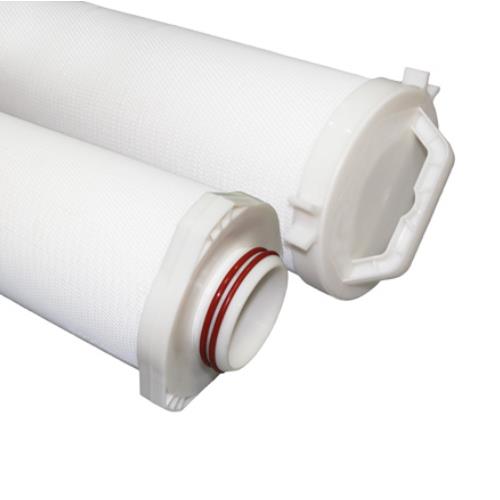
Oil and Gas Filtration Solutions
Water filtration are widely used in oil and gas industry: Oilfield water injection, Process circulating water filtration, cooling water filtration, amine liquid desulfurization, separation and purification of natural gas and oil refineries; Purification of fluids in the production process of hydrogen peroxide, lubricating oil, catalysts, etc. and particle removal and filtration of chemicals and oils.
Pullner filter elements can remove impurity particles in the water, improve the water quality, increase the accuracy of oilfield water injection, and increase the development efficiency.
Industrial water mainly includes boiler water, process water, cleaning water and cooling water, sewage, etc. In order to protect the environment and save water resources, recycling water treatment is necessary. Pullner provide filtration solutions to remove dirt, microorganisms and other impurities in the water, purify the water quality, and reach the standard of reuse.
Cooling water is widely used in many industries, such as power plants, oil refineries, and chemical industries. Solid pollutants in the cooling water can damage equipment, reduce productivity, and increase costs. We provide filtration solution to remove pollutants, ensure the quality of cooling water, protect plant equipment, and save production and maintenance costs.
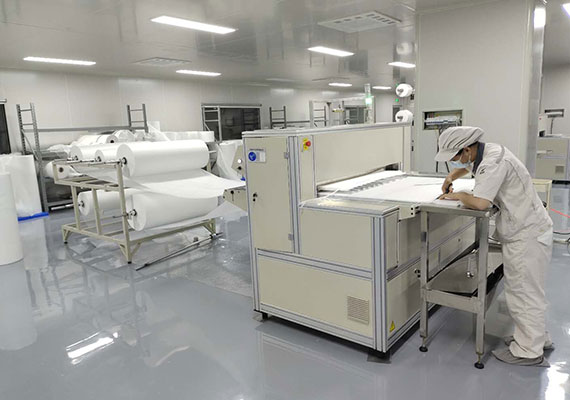
Why Choose Pullner Filters for Your Oil and Gas Industry
More than just a supplier – we’re your technical partner in filtration solutions
Customize Service
According to different applications and situation, Pullner provide customize filtration solution, ensure high quality water for industry production.
On-site Technical Support
Pullner provide on-site technical support for customers, guide the installation and use of the filter element on site to better serve customers.
After-Sales Service
Professional after-sales service team, 24 hours stand by, prompt response, ensure each customer’s filtration problem is resolved in time.
Your Trusted Filtration Partner
Delivering reliable filtration solutions tailored to your performance, quality, and efficiency needs.
Rated 4.1 | 5 Reviews TrustScore on


Salman
Recently used Pullner for automotive filtration solutions, and I’m extremely impressed. If you’re looking for filter solutions for automotive manufacturing, Pullner is your go-to company. Their products have drastically improved our assembly line efficiency. Highly recommended!
Albert May
We ordered electronics grade filters for a small run and the parts we received matched the specifications well. Communication on their end was straightforward, and delivery timing was reasonable. Overall, the process was smooth enough for our needs.
Frequently Asked Questions
Amine units typically need a two-stage approach: a particulate filter to catch iron sulfide, corrosion products, and salts in the lean and rich amine loops, followed by a carbon filter for hydrocarbons and degradation products. For the particulate stage, our pleated high flow cartridges (PP or glass fiber media) and melt blown cartridges both work well — the right choice depends on dirt loading, temperature, and how often you want to change elements. Tell us your circulation rate, amine type (MEA, DEA, MDEA), and operating temperature and we’ll size the housing and recommend the micron rating.
There’s no single answer — it depends on the formation. Tight reservoirs with low permeability often require 1–2 µm filtration to prevent plugging, while more permeable formations can tolerate 5–10 µm. Our high flow cartridges in 6″ × 40″ or 60″ configurations are commonly used here because the large pleated area and 152 mm diameter let one element handle the volumes typical of injection skids — fewer change-outs, smaller housing footprint, and lower differential pressure across the run.
Produced water is challenging because you’re dealing with oil carryover, scale, sand, and biological solids all at once. For offshore reinjection or surface discharge that has to meet OSPAR/EPA limits, we typically supply stainless steel housings (316L for chloride resistance) loaded with high flow pleated cartridges as a polishing stage downstream of hydrocyclones or flotation. For onshore produced water headed for disposal wells, the same setup works, often with a coarser pre-stage upstream. We’ll match the cartridge media to your free oil content and TSS levels.
Yes — that’s exactly what they’re built for. The multi-layer sintered mesh cartridges use 304 or 316L stainless construction with no binders or adhesives that could shed into the process. They’re rated 3–100 µm, handle high temperatures and corrosive fluids, and are designed to be backwashed in place rather than thrown away. That makes them well suited to refinery FCC flue gas, catalyst recovery in fluidized bed and slurry loop reactors, and similar duties where disposable elements would burn through cost too quickly. For sour service we recommend 316L.
Melt blown cartridges are depth filters — they hold more dirt throughout the media wall, making them cost-effective for higher solids loads, fluids with gels or gums, or pre-filtration ahead of more expensive elements. Pleated high flow cartridges are surface-area-driven, so they shine when you need high flow rates with low pressure drop and clean fluids — think mol sieve protection, refinery final product polishing, or amine particulate stages. Many operators run melt blown as a roughing stage and pleated as a final polish. We can quote both if you’re not sure which to start with.
Yes. Our stainless steel filter housings are built to order in 304 or 316L, sized to your design flow rate, operating pressure, temperature, and the cartridge style you want inside (high flow, pleated, string wound, or melt blown). They’re used across mol-sieve dehydration, refinery alkylation and amine systems, condensate dewatering, molecular sieve driers, completion fluids, glycol contactors, gas pipeline pigging receivers, and mercury removal units. Send us the line conditions and we’ll come back with a housing GA drawing and cartridge selection.
Yes. Our high flow cartridge line is dimensionally and performance-equivalent to the major OEM elements found on injection, produced water, and amine skids — same 6″ (152 mm) diameter, single open end, pleated inside-to-outside flow, and the same 20/40/60-inch lengths. If you can share the OEM part number or a photo of the cartridge endcap, we’ll confirm the cross-reference and quote the equivalent.

Speak to Our Filtration Expert
Get in touch with our expert team for custom filtration solutions
 English
  Spanish
  Arabic